Where to stay in Milan: the best areas for a first visit
For a first visit, stay around the Duomo or in Brera. How Milan's areas compare on price and metro lines, plus the 2026 tourist tax of €3-10 a night.
Quick answer
For a first visit, stay in the Duomo area or in Brera: you can walk to the main sights and both are well served by the metro. Pick Centrale if you plan day trips by train or have an early flight, Navigli for nightlife, and Porta Venezia for lower prices with a local feel.
Tourist tax rates and event dates below were checked on 5 October 2026. Each area below lists its nearest metro stations, so you can check how easily it connects to the places you want to see.
Best areas to stay in Milan compared
| Area | Best for | Metro | Price level |
|---|---|---|---|
| Duomo | First-timers, short stays | Duomo (M1, M3), Cordusio (M1), Missori (M3), San Babila (M1, M4) | €€€ |
| Brera | Couples, art lovers | Lanza, Moscova (M2), Montenapoleone (M3) | €€€ |
| Navigli | Nightlife, younger travellers | Porta Genova (M2), Sant’Ambrogio and De Amicis (M4) | €€ |
| Porta Nuova and Isola | Food, modern design, second visits | Garibaldi FS (M2, M5), Isola (M5), Gioia (M2), Repubblica (M3) | €€ to €€€ |
| Centrale | Day trips by train, budget | Centrale (M2, M3), Repubblica (M3) | € to €€ |
| Porta Venezia | Budget, local feel, LGBTQ+ travellers | Porta Venezia, Palestro, Lima (M1) | €€ |
| Magenta and Sant’Ambrogio | Families, quiet nights, the Last Supper | Conciliazione, Cadorna (M1, M2), Sant’Ambrogio (M2, M4) | Not confirmed |
The metro lines are colour-coded: M1 red, M2 green, M3 yellow, M4 blue and M5 lilac. The M4 runs driverless from Linate Airport across the city to San Cristoforo.
Duomo: best for a first visit
The historic centre around the cathedral, the Galleria and La Scala is the easiest base for a short stay. You can walk to most of the sights on a first trip, and four metro stations put the rest within a few stops.
It is the most expensive area in Milan, and the streets around the cathedral are crowded with visitors during the day. Once the shops close, the area goes quiet. If you are only in town for one or two nights, the convenience usually outweighs the price.
Brera: the most charming base
Brera has cobbled streets, galleries, small shops and the Pinacoteca di Brera art museum. It is about a 15-minute walk from the Duomo and has a good choice of restaurants.
Prices are similar to the Duomo area, with very few budget options, and the streets get crowded in summer. It suits couples and anyone who wants a central base with more character than the area right around the cathedral.
Navigli: for nightlife and aperitivo
The canal district is where Milan goes for aperitivo and late evenings. Hotels here are generally better value than in the centre.
It is noisy, especially at weekends, so ask for a room on the courtyard side. You cannot walk to the main sights from here, so plan on the M2 from Porta Genova or the M4 from the northern edge of the district. It works best for younger travellers and anyone on a second visit.
Next door, Tortona is a former industrial district of lofts and design studios, home to the MUDEC museum and the main hub of Design Week. It shares Porta Genova station with the Navigli.
Porta Nuova and Isola: modern Milan
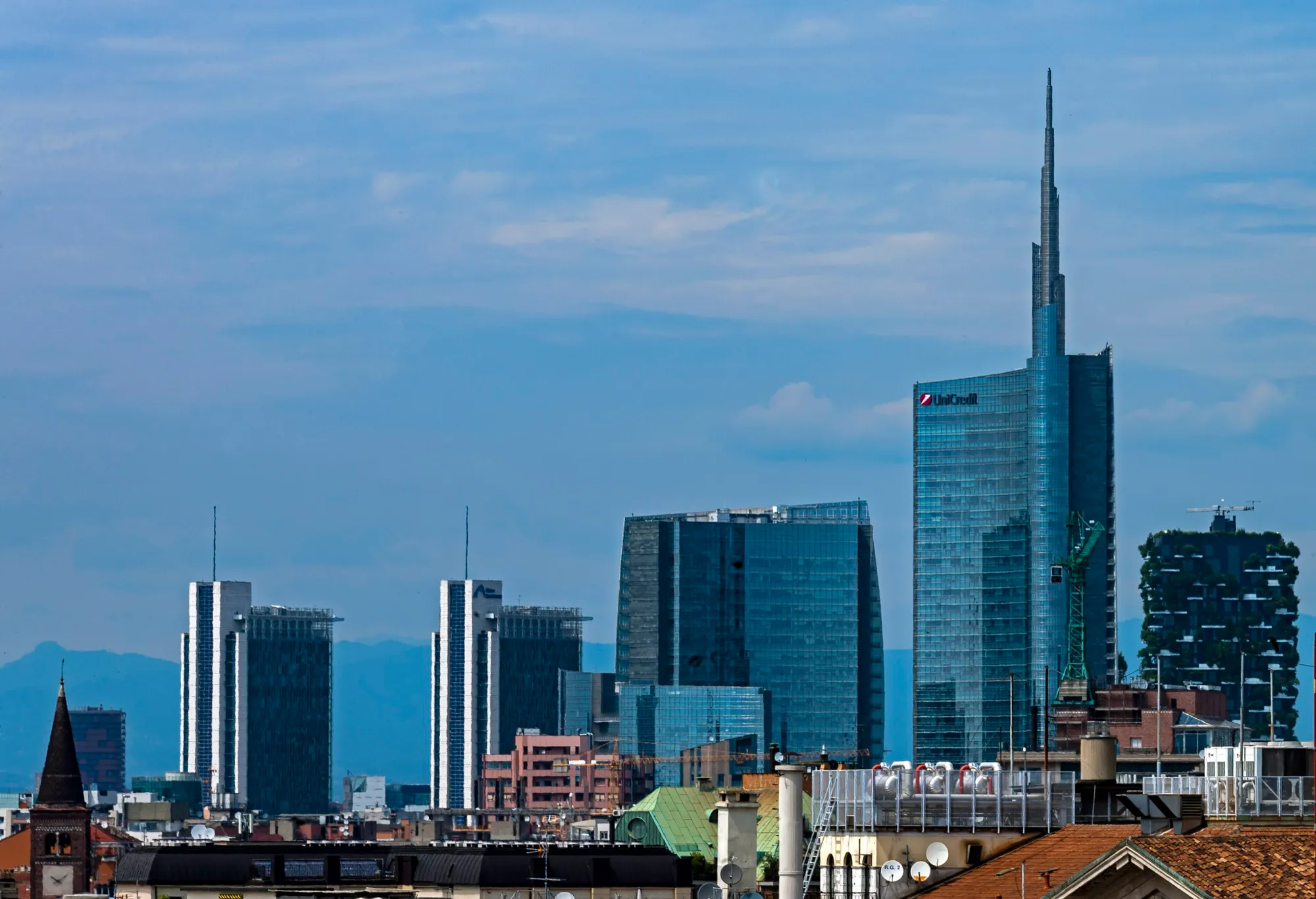
This is the Milan of skyscrapers, the Bosco Verticale and the Biblioteca degli Alberi park. Isola, just north, has bars, vintage shops and a strong food scene. Transport links are very good, with Garibaldi FS station on both the M2 and the M5.
The trade-off is that it feels modern, and some guides suggest Isola for repeat visitors more than for first-timers. Business travellers and food lovers will feel at home here.
Centrale: best for day trips and early trains
The streets around Milano Centrale have the widest choice of budget hotels, plus business hotels and a few luxury ones. Trains to the lakes and to other Italian cities leave from here, and the Malpensa Express airport train stops at Centrale.
If you are planning a day trip to Lake Como or have an early flight, staying here saves time. The area itself is busy and less atmospheric than the centre, and the yellow M3 runs straight to Duomo station.
Is it safe to stay near Milano Centrale?
Milan is generally considered safe for tourists, and the Centrale area is fine for most visitors who take normal care. Here is what to expect:
- The station and surrounding streets are busy and noisy, and pickpocketing is more common than elsewhere in the city.
- Some travellers find the side streets uncomfortable at night, and the office blocks go quiet in the evening.
- The station is one of the city’s “zone rosse”, reinforced-surveillance zones where police can order people with criminal records who behave dangerously to leave. The current order runs to 30 March 2027. Piazza Duomo, Garibaldi station and the Navigli are covered too, so the label alone does not single out Centrale.
In practice: keep your phone and bag close in the station, use the main lit streets such as Piazza Duca d’Aosta and Via Vittor Pisani, and take a taxi if you come back late. If you are travelling with children and expect late evenings, the Duomo or Magenta areas are calmer choices.
Porta Venezia: local feel, lower prices
Porta Venezia has Liberty (Art Nouveau) buildings, the Indro Montanelli public gardens, the city’s main LGBTQ+ bar scene, Eritrean restaurants and the shops of Corso Buenos Aires. It is two metro stops from the centre on the M1 and generally cheaper than the Duomo or Brera.
Corso Buenos Aires carries heavy traffic, and the area is less geared to tourists. It suits repeat visitors and travellers on a budget.
Magenta and Sant’Ambrogio: quiet and close to the Last Supper
This elegant, residential area runs along Corso Magenta past Santa Maria delle Grazie, home of the Last Supper, and the Basilica di Sant’Ambrogio. Sforza Castle and Parco Sempione are close by.
Nights are quiet and there is little nightlife, which makes it a good fit for families. Cadorna station, on the M1 and M2, is the other terminus of the Malpensa Express. If you stay here, book your Last Supper tickets well ahead, since being next door does not get you in without a booking.
Find a hotel by area
These links open Booking.com already filtered to each area, so you can compare current prices and reviews for your dates.
Milan tourist tax in 2026
Milan charges a tourist tax (imposta di soggiorno) per person per night, paid at your hotel. These are the 2026 rates, raised for the Winter Olympics:
| Type of accommodation | Per person per night |
|---|---|
| 4 and 5-star hotels | €10.00 |
| 3-star hotels | €7.40 |
| 2-star hotels | €5.00 |
| 1-star hotels | €4.00 |
| Holiday apartments, short lets, B&Bs | €9.50 |
| Hostels and campsites | €3.00 |
You pay it for the first 14 consecutive nights in the same place. Under the rules published for 2025, under-18s are exempt, along with a few other groups such as people with disabilities and one companion; ask your hotel if you think an exemption applies. In July 2026 the city’s budget assessor said rates could go back to pre-Olympic levels in 2027, so expect these figures to change next year.
For a couple spending four nights in a 4-star hotel, the 2026 tax adds €80 to the bill.
When to book early
Hotel prices in Milan jump during the big fairs and fashion weeks. Book as early as you can if your trip overlaps with:
- EICMA motorcycle show: 5 to 8 November 2026 (public days) at Fiera Milano Rho.
- Formula 1 opening event: 18 to 20 February 2027.
- Women’s Fashion Week: 23 February to 1 March 2027.
- Salone del Mobile and Design Week: 13 to 18 April 2027. This is the busiest week of the year for Milan hotels.
The Rho fairgrounds are on the M1, so for a trade fair any hotel along the red line works.
Getting to your hotel from the airport
The Malpensa Express connects Malpensa Airport to Cadorna (about 37 minutes) and to Centrale (about 51 minutes), so Magenta and Centrale are the easiest areas to reach with luggage. Our guide to getting from Malpensa to Milan explains the options.
The first guides are on their way.
Frequently asked questions
What is the best area to stay in Milan for a first visit?
The Duomo area, because you can walk to the cathedral, the Galleria and La Scala. Brera is the alternative if you want cobbled streets and good restaurants and can spend a bit more.
Is it safe to stay near Milano Centrale?
Yes, for most travellers, with the usual care. The station area is busy and pickpocketing is more common there, and some travellers find the side streets unpleasant late at night. It works well if you have early trains, less well if you plan to come back late with children.
Navigli or Brera, which is better?
Navigli is cheaper and livelier at night, but noisy and not walkable to the main sights. Brera is quieter, central and more expensive.
How much is the tourist tax in Milan?
In 2026 it is €3 to €10 per person per night depending on where you stay, for example €10 in 4 and 5-star hotels and €7.40 in 3-star hotels. It applies to the first 14 nights. These are 2026 rates, and the city has said they may go back down in 2027.
Is it a good idea to stay near Centrale for day trips?
Yes. Trains to Lake Como and other Italian cities leave from Centrale, and the Malpensa Express airport train stops there too. Stay on the main streets if you come back late.
When are Milan hotels most expensive?
During Design Week and the Salone del Mobile (13 to 18 April 2027) and Women's Fashion Week (23 February to 1 March 2027). Trade fairs at Rho also push prices up, so book early for those dates.